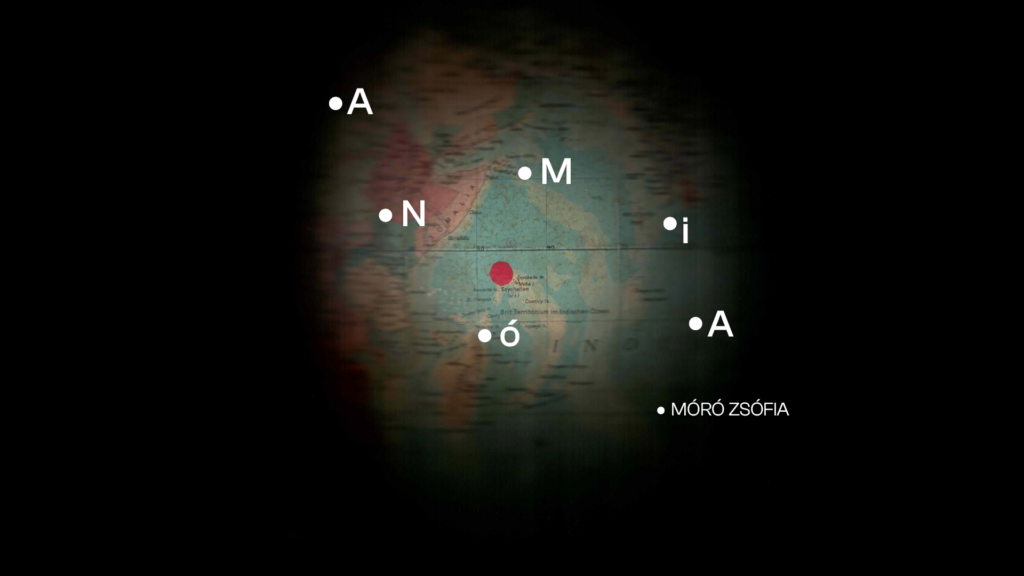
Anomie
February 7, 2026 – March 3, 2026
ISBN+ Baross u. 42, 1085
Opening: February 7, 2026, 6 p.m.
The exhibition will be opened by photographer Szabolcs Barakonyi
“I took on the role of a savage detective to uncover a case whose file had been lost. In this speculative investigation, I outline the legacy of an unknown protagonist of the 1990s and, through this, the memory of the regime change.”
Zsófia Móró looks back on the story of her father, who disappeared in the 1990s, from a distance of 30 years. The title of the exhibition captures the uncertain period of the regime change with a concept borrowed from sociology, which refers to a social condition where old norms are breaking down but a new, stable system of rules has not yet been established. The investigation, which expands from a personal family history to a social scale, offers possible interpretations for exploring this complex process, but—like the threads of her father’s life—it is speculative in many respects due to the fragmentary nature of the sources. These gaps and uncertainties highlight the unprocessed nature of the past and the need for a broader social dialogue on the transition to democracy; it is up to the viewer to recognize that the investigation does not end with the exhibition.
Curator: Mátyás Horváth
⤷ PUBLICATION LAUNCH
As part of the exhibition, a publication will be released that continues the investigation.
Graphic designer: Boldizsár Tóth
⤷ ACCOMPANYING EVENTS:
⤷February 18, 6 p.m.
Conversation about anomie as a sign of the times with social historian Tibor Valuch
⤷March 3, 6 p.m.
Closing guided tour
_________
Zsófia Móró (1997) graduated from MOME Media Design in 2023 and currently works on various collaborative projects. She is interested in processing the past and participatory creative strategies, and her work moves between these areas. The exhibition is a follow-up to Sorry M.P., a home exhibition where she juxtaposed her personal legacy with the social changes of the 1990s.
Special thanks: Máté Tóth-Heyn, András Dezső, Mátyás Czeglédi
Supported by: NKA